What AI search visibility means
AI search visibility is how often AI assistants name your brand and cite your site when people ask questions in your category. The assistants that matter today are ChatGPT, Gemini, Perplexity, Claude and Google's AI Overviews.
It has two halves, and they behave differently:
- Being named. The answer mentions your brand, somewhere in a list of options or as the one recommendation.
- Being cited. Your site is one of the sources the answer links to.
You can have one without the other. An answer can quote your blog post and recommend a competitor, or name you while linking only to review sites. Both halves are worth tracking, separately.
GEO, AEO, AIO: one job, three acronyms
Generative engine optimization, answer engine optimization and AI optimization describe the same work: getting AI answers to name and cite you. The acronyms mostly differ by who's selling the service. If a client asks for "GEO", this is it. AEO tools and GEO tools are the same software, too.
Why your rankings don't cover it
Classic rank tracking doesn't translate, for three reasons.
- There's no list of ten. An answer names a handful of brands in some order. You're in it or you're not.
- The answer changes. Ask the same question twice and the brands and sources shift. A single check is an anecdote; you need shares over many answers.
- The questions are different. People ask full questions with context: budget, team size, what they already use. Keyword lists miss most of them.
Answers also often lean on third-party pages such as review sites, forums and comparison articles. Which ones depends on the category, so you measure it rather than guess: citation tracking lists every source the answers use.
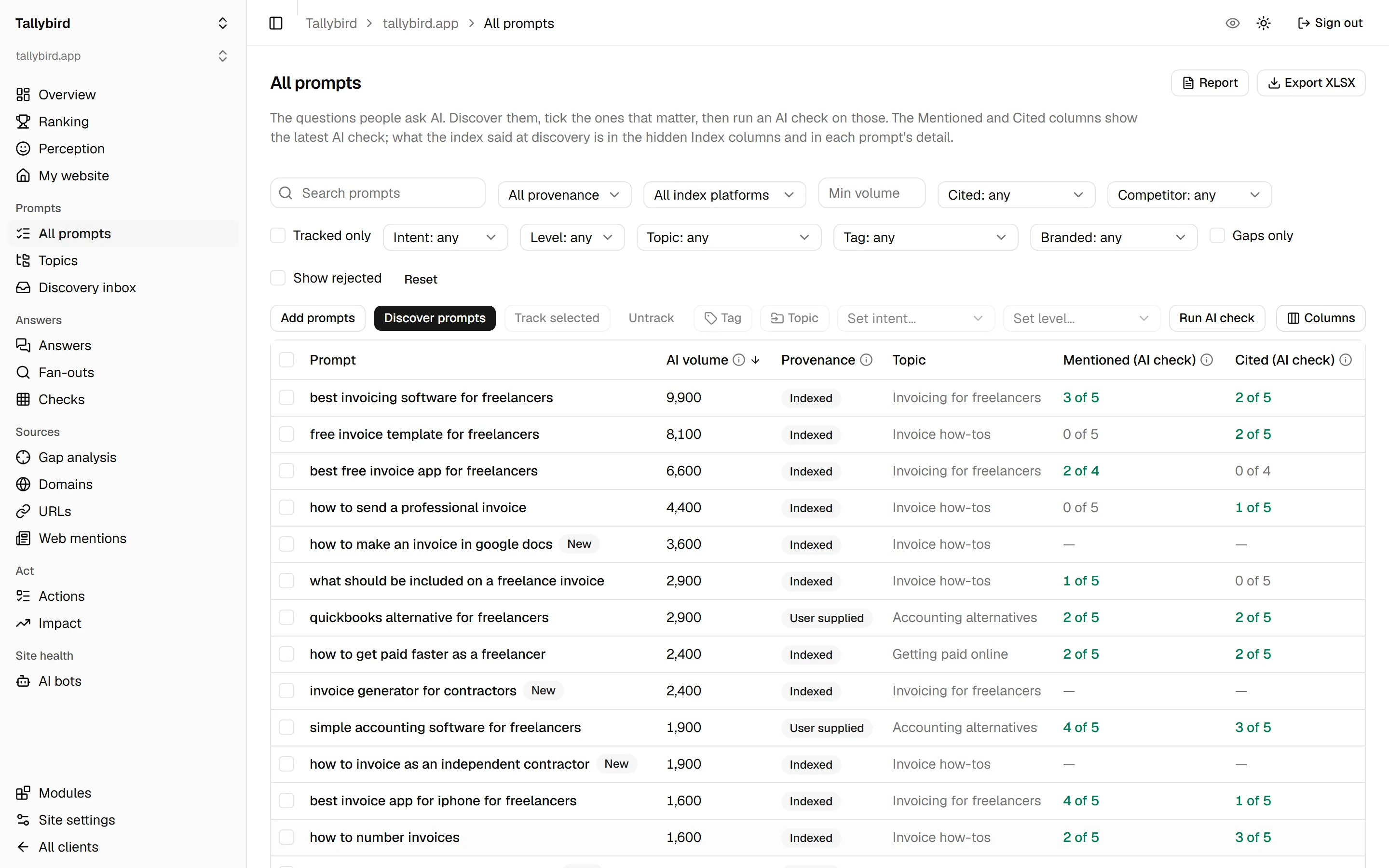
Step 1: pick the prompts that matter
Everything rests on the prompt list, so build it from questions that exist. Prompt discovery finds them three ways: prompts where your domain is already cited, prompts where a competitor's domain is cited (the ones you can win), and questions asked around your topic.
A useful starting list:
- 20 to 50 prompts a buyer would genuinely ask, spread across the topics you sell.
- Mostly non-branded. Branded prompts ("is X any good?") matter, but they won't show you the competitors you're losing to.
- A mix of general questions ("best invoicing software") and niche ones ("invoicing for design agencies that bill retainers").
Step 2: measure where you stand
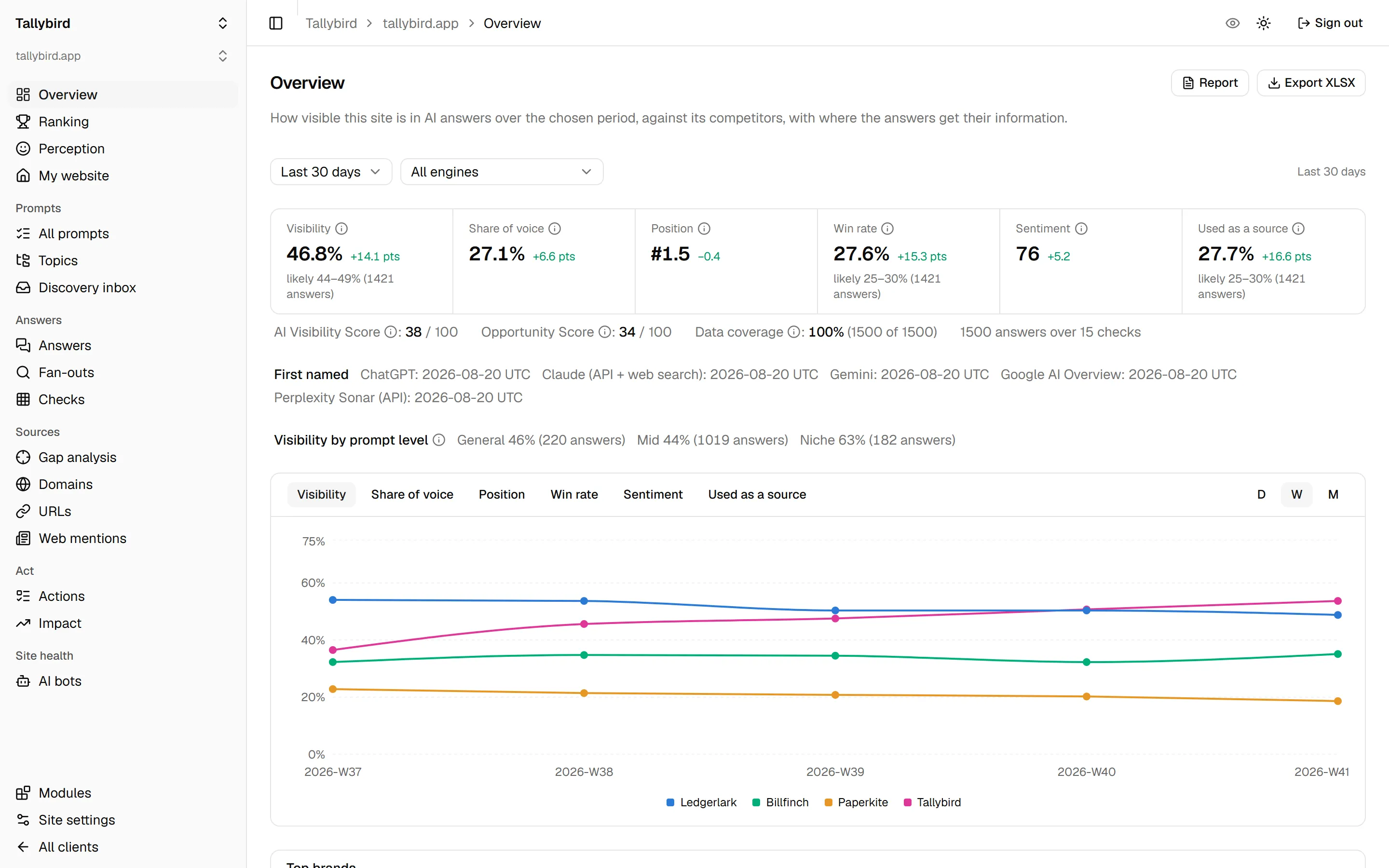
Run one check across all the engines you care about. Then read six numbers:
- Visibility: the share of answers that name you.
- Share of voice: your share of all mentions of the brands you track.
- Position: where you're named, on average, among those brands.
- Win rate: how often you're named first.
- Sentiment: how the answers describe you, on the answers that were analysed.
- Used as a source: the share of answers that cite your site.
Read them per engine as well as overall; AI brand monitoring shows all six for the engines you pick. You can do well in one assistant and be absent from another, and the fix is different for each. Treat every number as a range: a rate based on 40 answers is much less certain than one based on 400.
Step 3: find the gaps
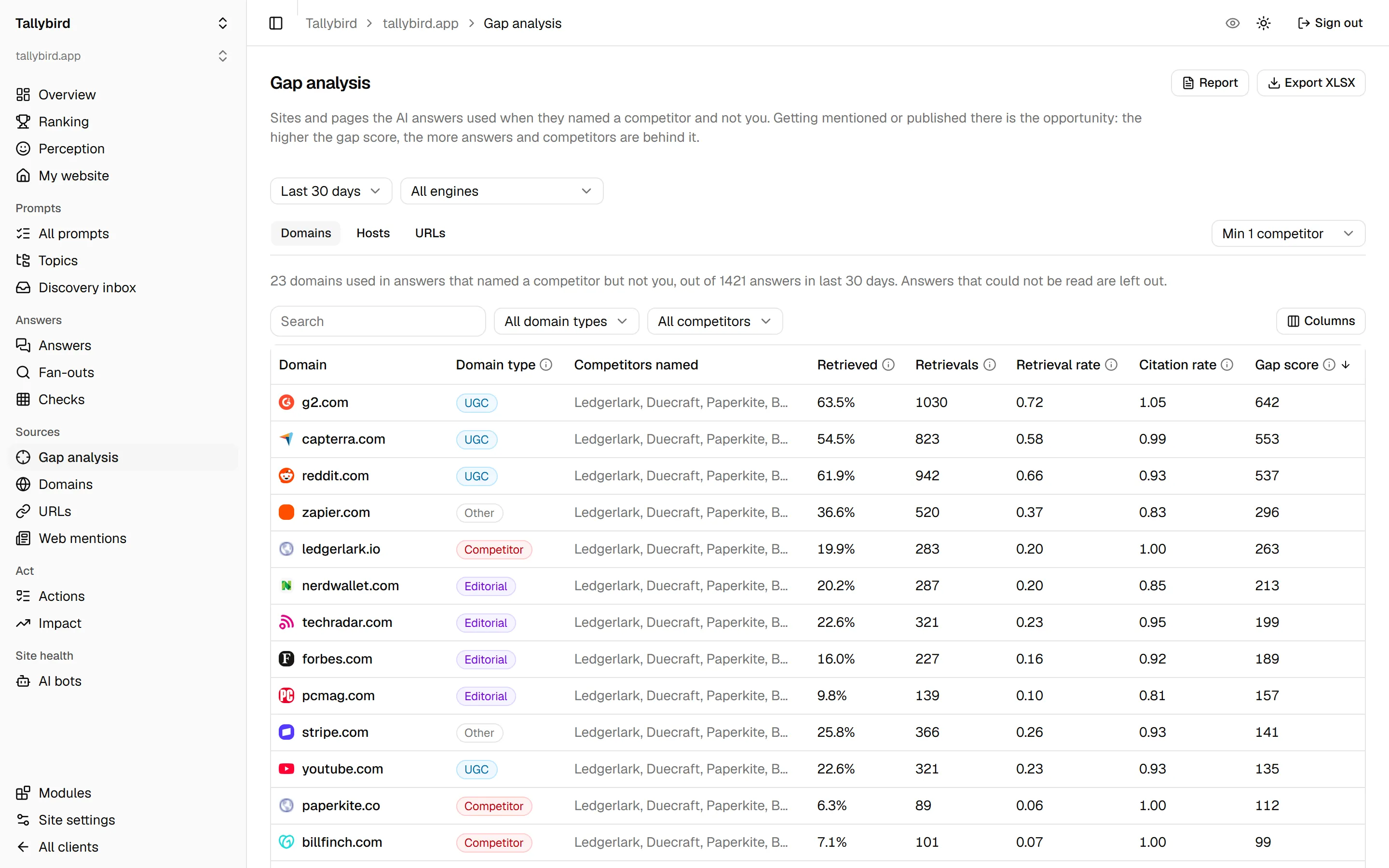
The useful question isn't "how visible are we?" but "where is a competitor named and we aren't, and which pages did the answer read?" Gap analysis answers it directly: the domains, hosts and pages the answers used when they named a competitor and not you, ranked by how much they matter.
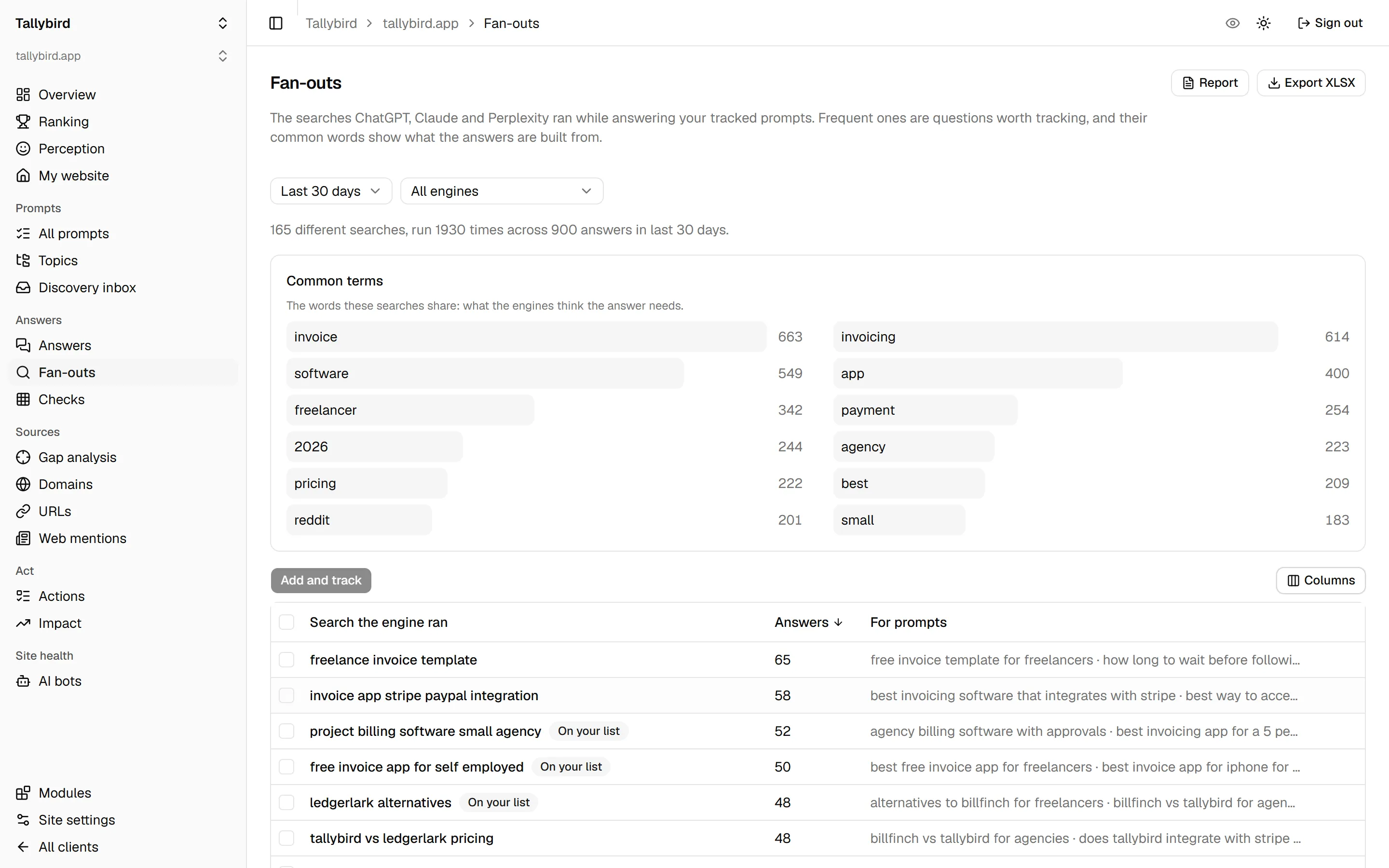
Two more places to look. The searches an engine ran behind its answer (where it reports them) show what it went looking for. And the brands it names that you don't track yet are often competitors you hadn't counted.
Step 4: fix the pages you own
For each prompt you're losing, find the page that should win it, or write it. What tends to help:
- Answer the actual question near the top, in plain words an assistant can quote.
- State the facts answers reach for: who it's for, prices, features, comparisons, limits.
- Name your brand on the page. If an answer cites your page without naming you, the page probably doesn't make the brand obvious.
- Let the crawlers in. If your robots.txt blocks the AI search bots, they can't read you. The AI crawler check tests about 50 of them, and the AI robots.txt generator writes the rules for the ones you allow.
The tool writes a short page brief for any prompt, based on the answers it stored: what the answers rewarded and what the page should cover.
Step 5: get mentioned where answers look
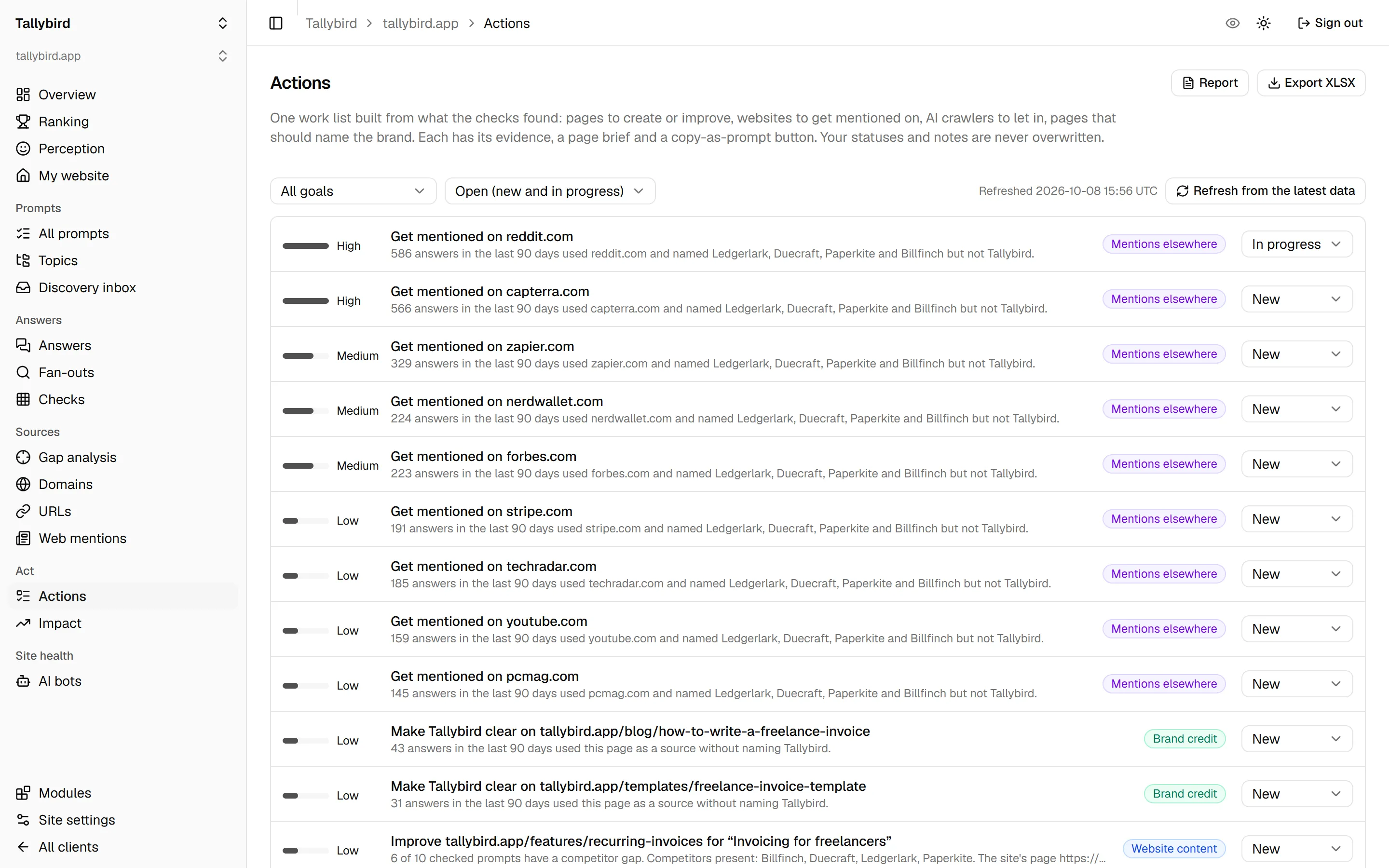
When the answers keep citing the same review site, forum thread or comparison article, being in that page is often the shortest path into the answer. That's ordinary digital PR and community work, pointed at a list you can see. The Actions list pulls it together: pages to create or improve, sites to get mentioned on, crawlers to let in, each with its evidence.
Step 6: re-check and prove it
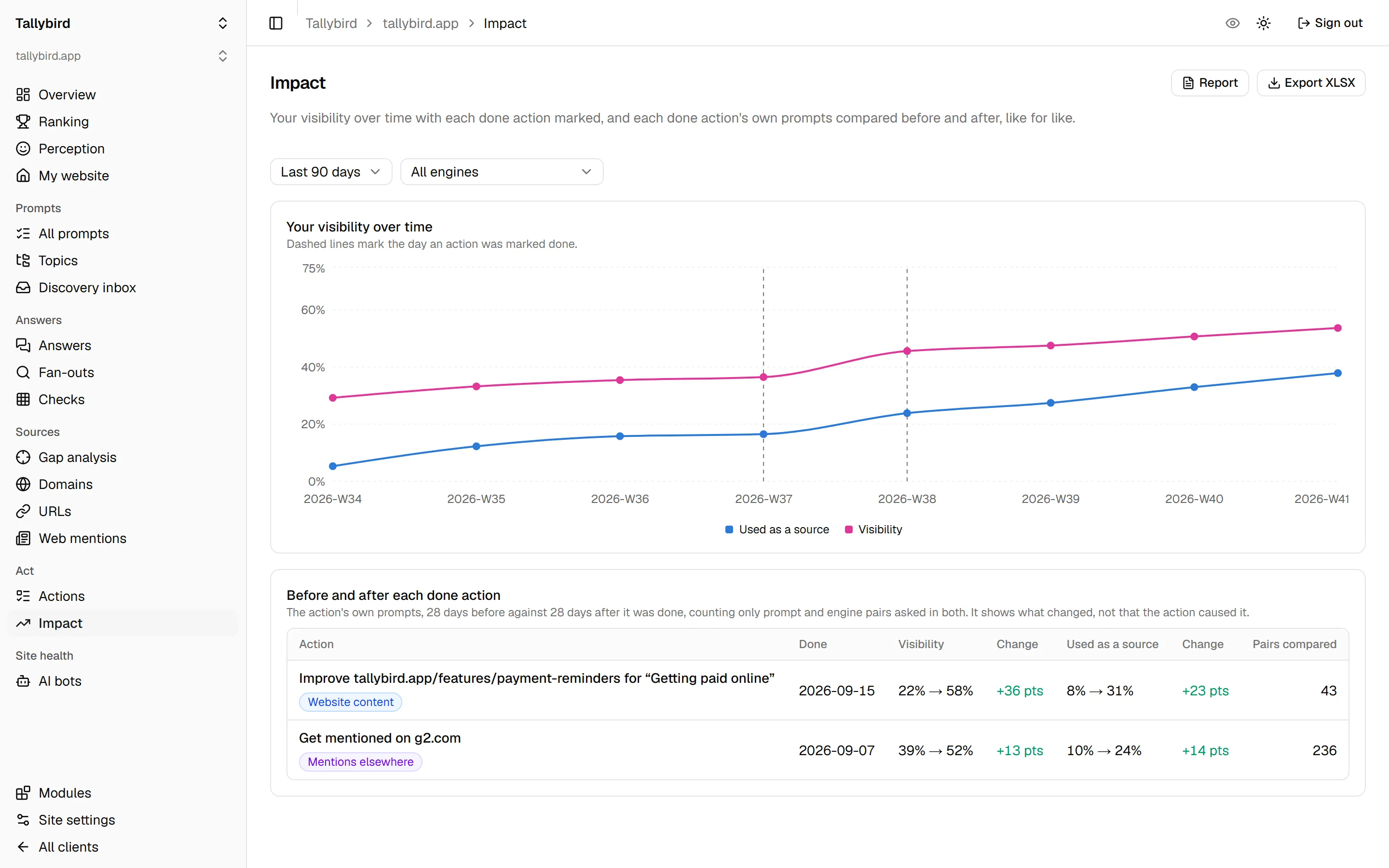
Track the same prompts on the same engines on a schedule; weekly is plenty for most sites. Compare any two checks to see each prompt and engine you gained or lost, and mark actions done so their impact can be compared before and after, like for like. That's the report a client actually wants: what changed, and why.
What it costs to do this properly
The checks themselves are cheap: fractions of a cent per answer at DataForSEO's prices. Tracking 100 prompts a week on ChatGPT, Gemini, Perplexity and Google's AI Overview comes to about $4.77 a month. The tools that package it charge a great deal more. I built this one so that measuring AI visibility costs about what the data costs. See pricing for what a month of checks comes to.