An AI visibility audit in an afternoon
Rate a prospect or a client on observed AI answers instead of guesses: which prompts matter, who gets named, which sources decide it, and what to do first.
- Closed beta
- free
- your own DataForSEO key
Checks five engines
- ChatGPT
- Gemini
- Perplexity
- Claude
- Google AI Overviews
At a glance
Prompts a buyer would ask
Found from the client's domain, its competitors' and topic seeds.
One check, quoted first
25 prompts on all five engines cost about $1.61 at DataForSEO's prices.
Who gets named instead
Each tracked competitor, plus brands nobody put on the list.
The sources behind lost answers
Ranked by gap score: your outreach and content lists.
A report on one page
A PDF, a read-only link with no login, and an XLSX.
No client logins
Public AI answers and the public robots.txt, nothing else.
What an audit answers
One question, for a pitch or a quarterly review: when buyers ask AI about this market, does this brand come up? And if not, who does, and why?
Add the client, marked prospect or current, and a site. A client can have several sites; audit them one at a time.
What you enter for a site
- Domain
- The site you're rating
- Market and language
- Where buyers ask, and in which language
- Competitors
- Brands and domains
- Topic seeds
- A few subjects the client sells
Prompts a buyer would ask
Run prompt discovery three ways, then accept the 20 to 50 prompts a buyer would really ask and reject the rest. Each search is quoted first.
Finds land in the Discovery inbox with their source, a branded or non-branded label and a General, Mid or Niche level. Keep branded prompts to a handful: a brand named in the question usually comes back in the answer, which flatters the result.
Three searches for a prospect
- Each competitor's domain, citedMost useful: the prompts the client could win.
- The client's domain, citedWhere answers already link to the site.
- The topic seedsQuestions around what the client sells.
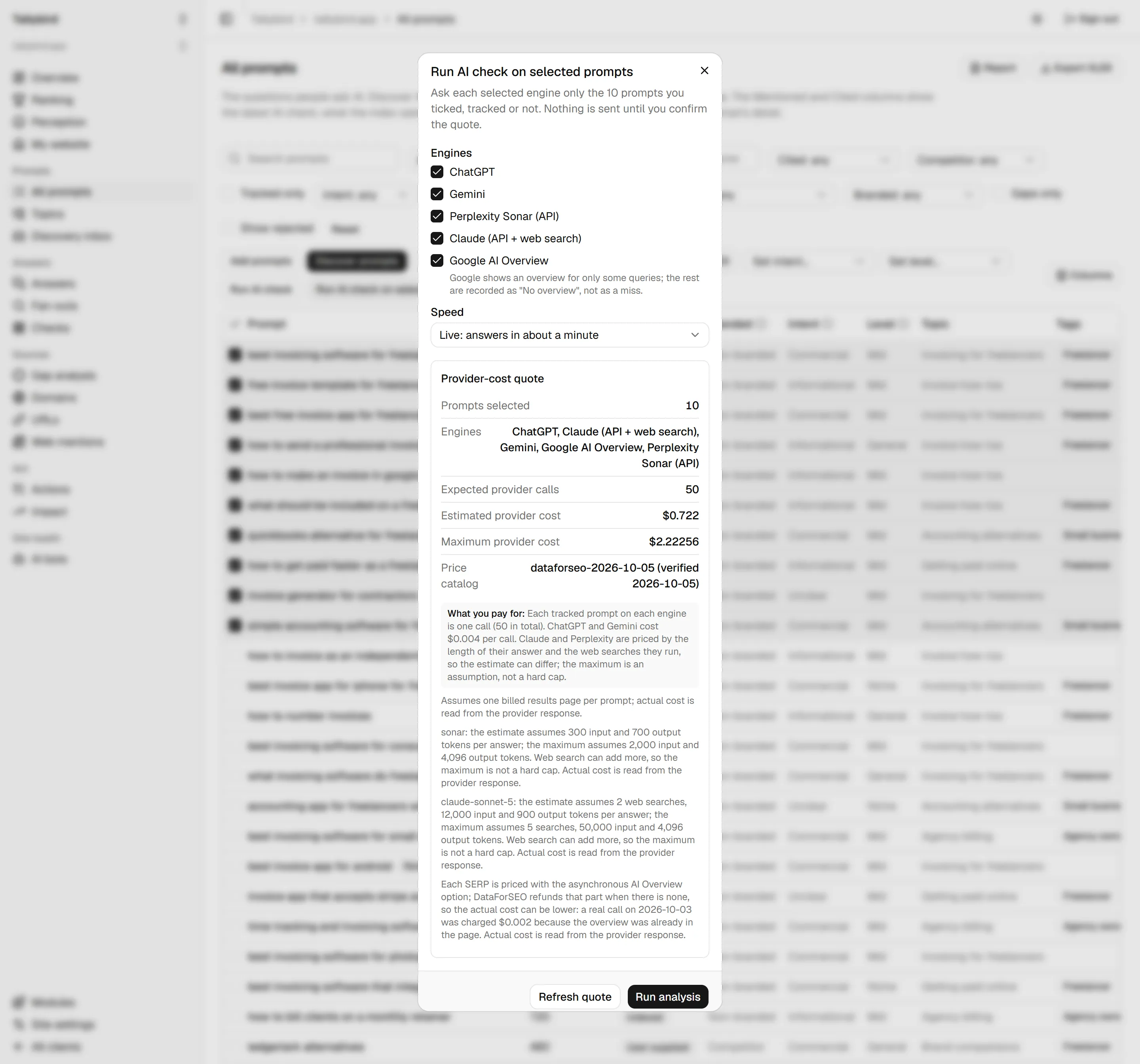
One check, quoted first
Pick the engines and confirm the quote. On all five, 25 prompts cost about $1.61 at DataForSEO's prices, most of it Claude.
Close the dialog and keep working: the check runs in the background and a progress tray tracks it.
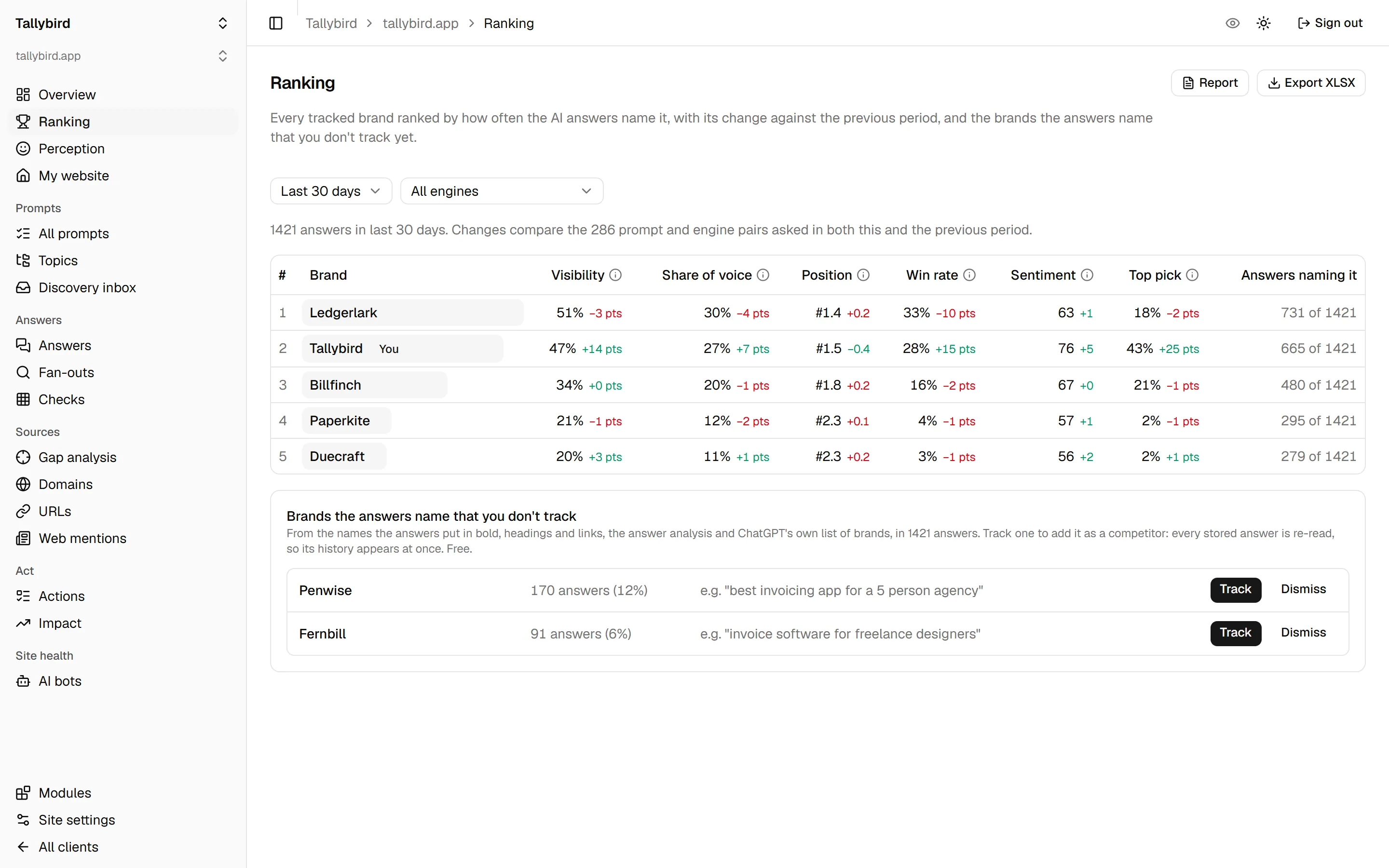
Who gets named instead
Ranking puts the client against each tracked competitor on visibility, share of voice, position and win rate. Below it sit the brands the answers name that nobody put on the list. That can be the most useful line in a pitch.
On the Overview, visibility by prompt level shows whether the client wins the broad questions or only the niche ones.
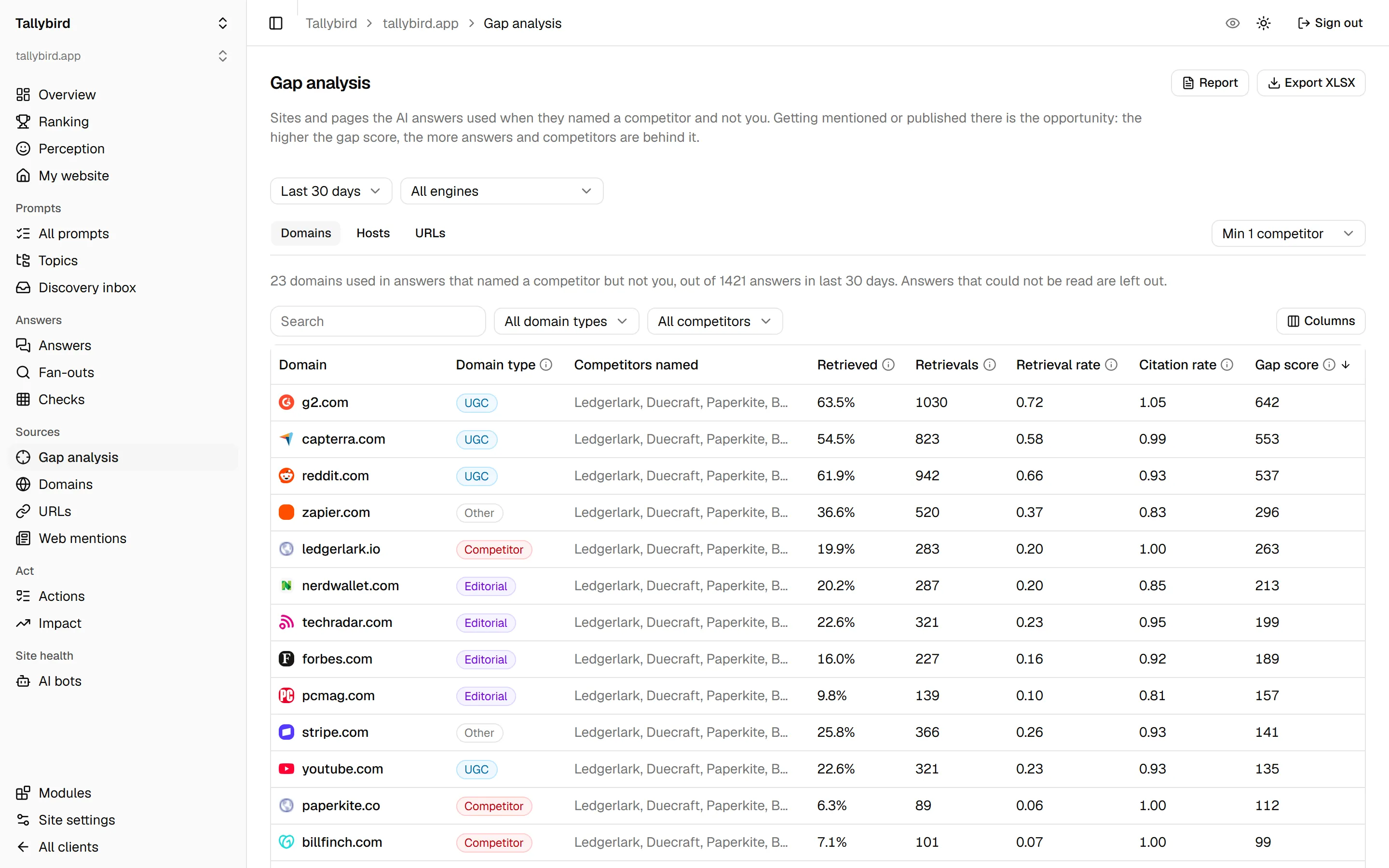
The sources behind lost answers
Gap analysis lists the sites and pages the answers used when they named a competitor and not the client, ranked by gap score. It's the outreach list and the content list in one table. Every other source the answers used is in citation tracking.
While you're there, run the free AI crawler check. A blocked search bot is the cheapest finding an audit can turn up.
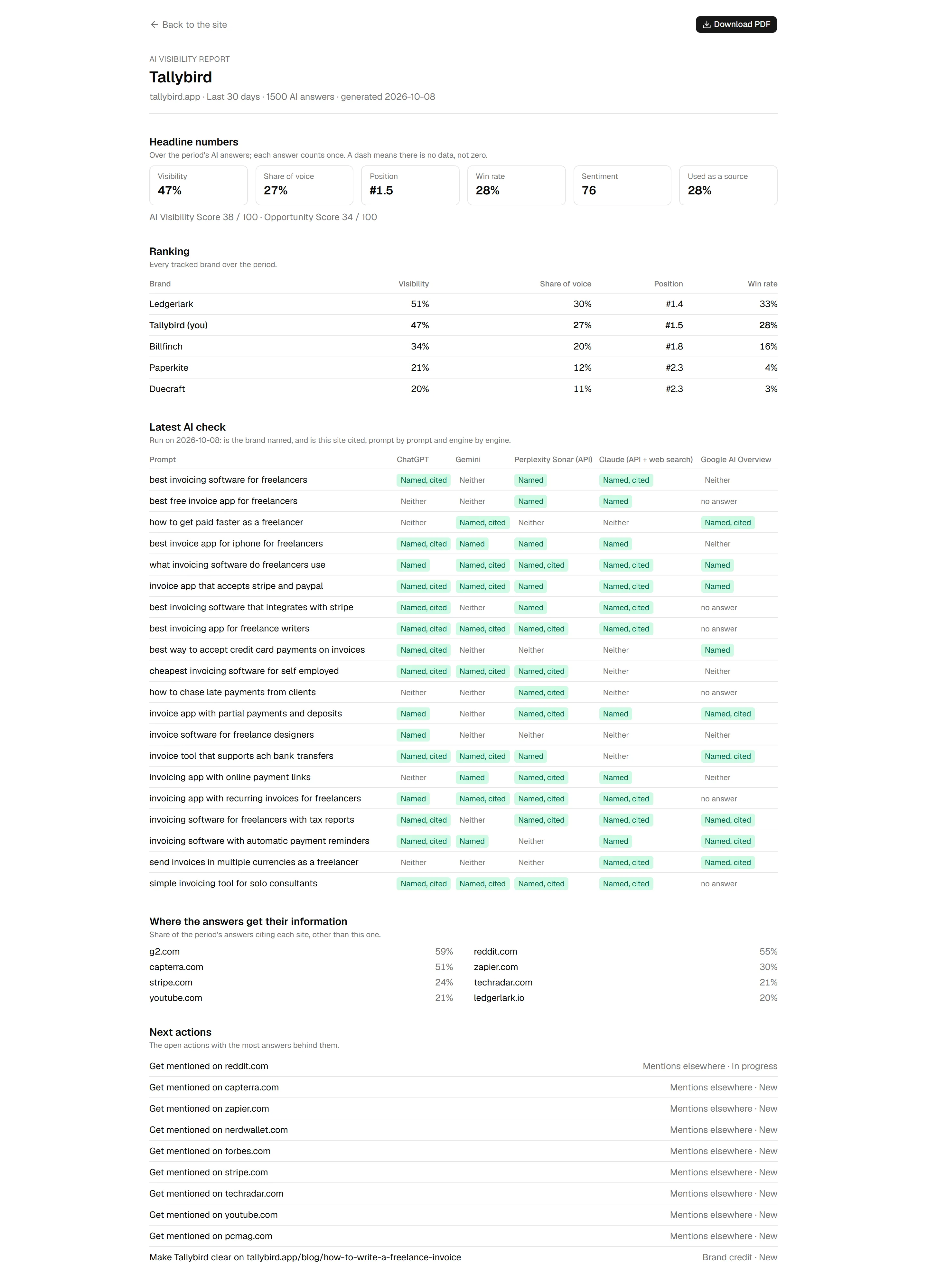
One page, and the evidence behind it
The report puts the headline numbers, the ranking, the latest check prompt by prompt, the sources and the next actions on one page.
When the prospect asks where a number came from, open the answer behind it: the text, the brands it named in order, and the sources it used.
Three ways to send it
- PDFDownload the page and attach it.
- A read-only linkNeeds no login and shows no prices or data providers.
- XLSXFor whoever wants every citation in its own row.
Reading the result honestly
The scores summarise observed coverage. They aren't a verdict on the client's marketing, and I'd say so on the call.
A high Opportunity Score means competitors are being named where the client isn't, weighted toward prompts with search demand. That's a list of work, not a grade. If the client signs, switch on the Re-checks module and this audit becomes the baseline you measure against.
- 25 prompts, all five engines
- about $1.61
- The same check without Claude
- about $0.28
- Client logins needed
- None
From prospect to report
The full walkthroughFind the prompts
Three searches, then keep the 20 to 50 a buyer would ask.
Run one check
About $1.61 for 25 prompts on five engines, run in the background.
Send the report
Ranking, gaps and next actions on one page, with the answers behind them.
Questions
How long does an audit take?
Plan on an afternoon. Most of it goes on choosing prompts and reading answers; the check itself runs in the background while you do something else.
What does one audit cost?
At DataForSEO's prices, one check of 25 prompts on all five engines costs about $1.61, plus the discovery searches. Leave Claude out and the same check costs about $0.28.
Do I need access to the client's accounts?
No. The audit reads public AI answers and the site's public robots.txt. No Search Console, analytics or client logins are involved.
Is one check enough to rate a site?
Enough for a first rating, not for a trend. AI answers vary between runs, which is why visibility comes with a likely range. Run a few checks before you promise a client a baseline.
What do I tell a prospect who scores 0%?
Start with what the app says next to it. A 0% always comes with a reason: too few answers, no brand named at all, or competitors named and the prospect not. Only the last one is bad news, and gap analysis shows where it comes from.
Get an invite.
I'm letting people in a few at a time. Leave your email and the site you'd track first, and you'll hear from me when your account is ready.
See pricing